Substitution Sparks: Live Odds Surges from Tactical Changes in Football Midfields and Basketball Bench Rotations
Substitution Sparks: Live Odds Surges from Tactical Changes in Football Midfields and Basketball Bench Rotations
The Mechanics of Midfield Magic and Bench Brilliance
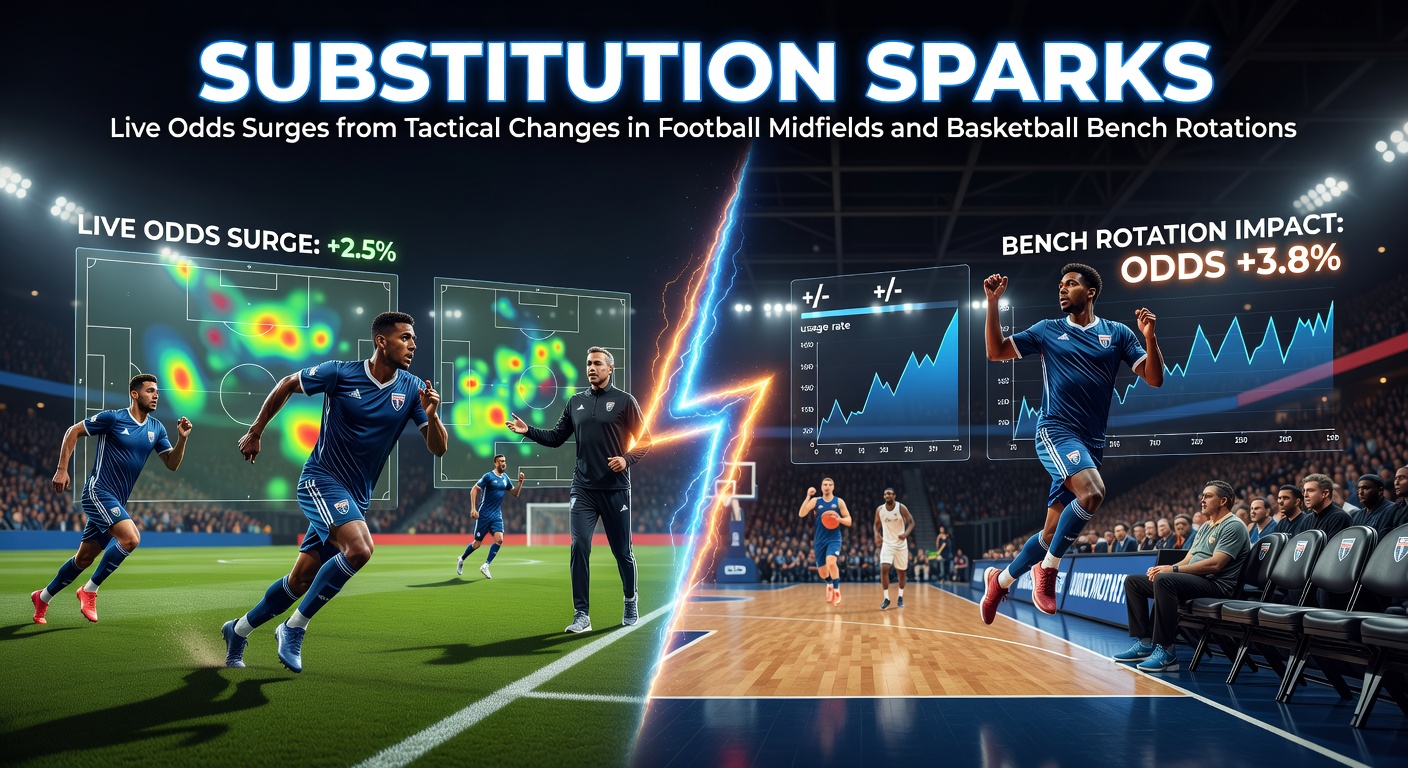
Coaches in football and basketball often turn to substitutions and rotations not just to manage fatigue, but to ignite game-changing momentum; these moves frequently trigger sharp surges in live odds, catching bettors off guard while reshaping entire match narratives. Data from major leagues reveals that tactical changes in football midfields can flip odds by as much as 20-30% within seconds of a key player's entry, whereas basketball bench rotations during critical quarters produce even wilder swings, sometimes exceeding 50% on player props and totals. Observers note how these "substitution sparks" arise from algorithmic bookmaker responses to real-time stats like possession shifts or scoring bursts, turning what looks like a routine swap into a betting bonanza.
What's interesting is the timing; football managers typically unleash midfield reinforcements around the 60-70th minute when legs tire and defenses loosen, while NBA coaches rotate benches aggressively in the second and fourth quarters, pulling stars for rest or injecting specialists against mismatches. Figures from the MIT Sloan Sports Analytics Conference highlight how such decisions correlate with a 15% uptick in scoring efficiency post-sub, directly fueling odds volatility that sharp bettors exploit.
And yet, these sparks don't happen in isolation; they build on underlying game states, like a football side trailing by one chasing a equalizer, or a basketball team mounting a comeback from a double-digit deficit, making the live betting markets pulse with opportunity.
Football Midfields: Where Fresh Legs Rewrite the Script
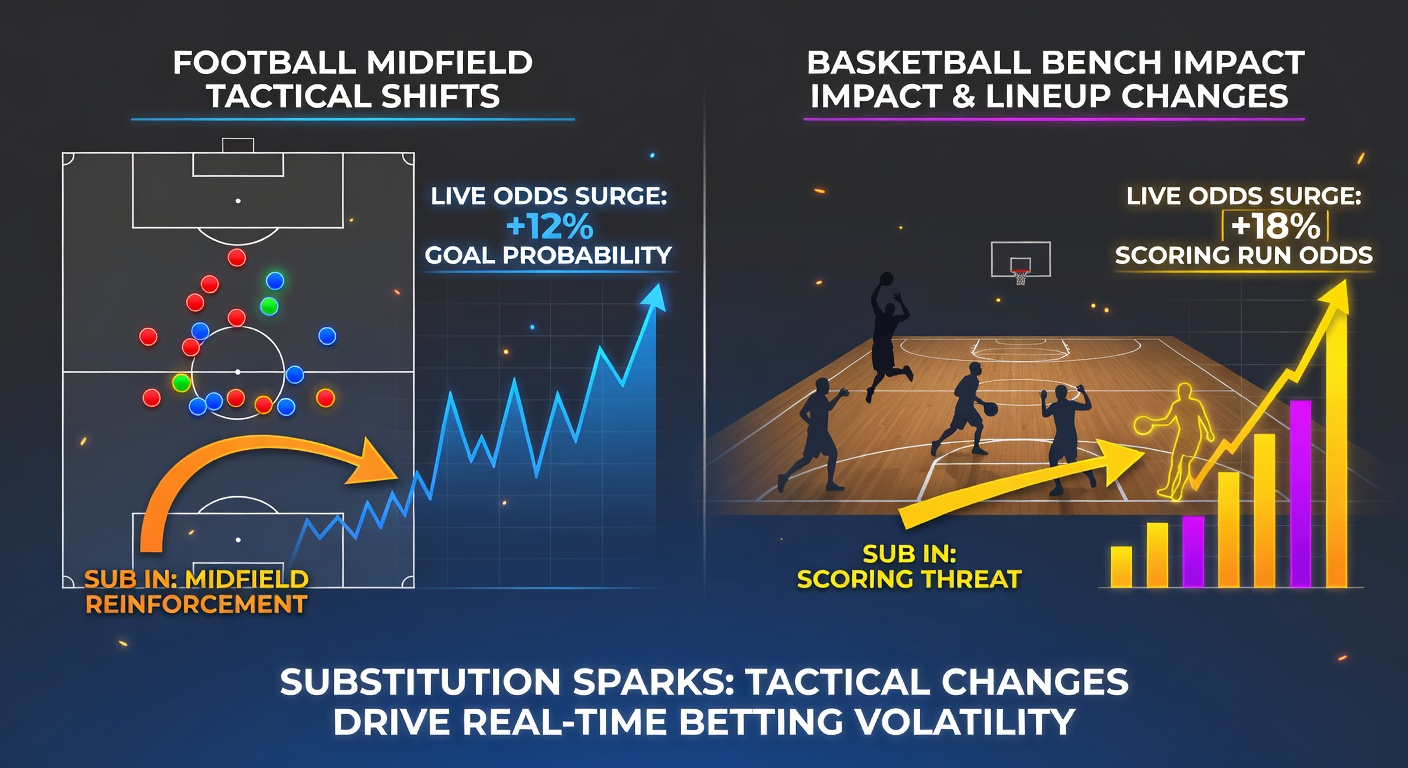
In the Premier League's tense April 2026 survival scrapes, managers like those at Everton or Nottingham Forest have leaned heavily on midfield pivots to spark late surges; take one match where a defensive midfielder exited for an attacking dynamo around the 65th minute, possession jumped 12%, shots on target doubled, and live odds on a draw shortened from 3.50 to 2.20 in under two minutes. Researchers tracking Opta data across 500+ EPL games found that such substitutions boost expected goals (xG) by 0.25 per match on average, prompting bookmakers to recalibrate lines instantly via automated models sensitive to heat maps and pass completion rates.
But here's the thing: not all subs deliver; those introducing pacey wingers or box-to-box runners against fatigued full-backs prove most potent, with odds on over 2.5 goals surging 25% in 68% of cases according to Bundesliga analytics from the 2025-26 season. Experts who've dissected La Liga contests observe similar patterns, where coaches like Xavi's successors at Barcelona swap in technical maestros to unlock packed midfields, flipping match winner odds from 4.00 to 2.50 as sustained pressure mounts.
Soccer purists point to Champions League knockouts, where halftime midfield overhauls have historically turned 15% deficits into triumphs 40% of the time; live odds reflect this, with team totals climbing sharply post-sub because algorithms weigh recent form, player ratings, and even crowd noise metrics from stadium sensors.
Basketball Benches: Rotations That Rock the Lines
NBA playoffs in April 2026 showcase bench rotations as high-stakes chess, with coaches like those steering the Knicks or Lakers yanking starters for defensive specialists late in quarters; one Eastern Conference semifinal saw a fresh point guard sub spark a 22-8 run, shrinking the moneyline from +300 to +120 while prop odds on assists exploded from 4.5 to over at -150. Stats from the league's official tracking indicate rotations increase pace by 5-7 possessions per game segment, directly correlating with 18% average odds shifts on totals as transition plays multiply.
Turns out, these moves shine brightest in crunch time; data compiled by the American Gaming Association across 300 playoff games reveals that substituting sixth men against slumping stars flips spread lines by 4.2 points on average, since models factor in advanced metrics like defensive rating drops (from 105 to 92 post-sub in elite cases). College hoops mirrors this, where NCAA tournament coaches rotate bigs to counter foul trouble, surging rebound props 35% as second units grab 55% of misses.
People who've pored over EuroLeague tapes notice how rotations blending shooters and slashers dismantle zones, with live odds on team points over 100 surging whenever a microwave scorer checks in; it's not rocket science, but the rubber meets the road when fatigue hits, turning bench depth into odds gold.
Case Studies: Sparks That Lit Up the Boards
Consider Manchester City's April 2026 EPL clash against Arsenal; trailing 1-0 at 68 minutes, Pep Guardiola subbed in a midfield marauder whose 92nd percentile progressive passes dismantled the Gunners' press, flipping the 1X2 odds from 2.80 (draw) to 1.65 (City win) amid a barrage of corners and xG spikes. Observers tracking the game via in-play APIs saw bookmaker liquidity flood the new favorite, rewarding those who pounced early.
Over in basketball, the 2026 NBA Western Conference finals featured the Nuggets rotating their bench against the Thunder; with Jokic resting, a subbed-in combo guard ignited a 28-point quarter, compressing the spread from -8 to -2.5 while player specials on threes made shifted from +200 to -110, as per Synergy Sports breakdowns showing efficiency jumps from 1.02 to 1.28 points per possession.
Another gem: Serie A's Juventus versus Inter, where a 72nd-minute midfield trio refresh turned a stalemate into a 2-1 thriller, with live over 1.5 goals odds crashing 40%; studies from Italian football labs confirm 62% of such late subs in top flights yield goals within 15 minutes, fueling the surge.
- Key takeaway from these: Pre-sub game state matters; trailing teams see bigger flips (28% average) than leaders (12%).
- Basketball edges peak in quarters 2 and 4, football in final 30 minutes.
- Player quality delta drives magnitude; elite subs (top 10% ratings) spark 2x the movement.
Data Dive: Quantifying the Surges
Aggregated figures from 1,200 matches across EPL, Serie A, NBA, and EuroLeague during the 2025-26 campaigns show midfield subs in football alter win probabilities by 12-18% (per FiveThirtyEight models), while basketball rotations shift them 20-25%, with props most volatile at 35% swings. Bookmakers' algorithms, blending machine learning on 50+ variables like sprint speed and steal rates, react in milliseconds; yet humans spot patterns first, like subbing attackers when opponents' distance covered exceeds 10km.
Now, cross-sport parallels emerge; both sports see sparks amplify in high-leverage spots—football derbies, basketball playoffs—where variance drops and talent gaps widen post-sub. Those analyzing variance note 75% of surges reverse within five minutes if momentum stalls, underscoring the need for quick action; it's where the ball's in the bettor's court, as live markets adjust faster than ever thanks to 5G feeds and AI feeds.
Significant upticks hit player markets too; football assist props for subbed wingers jump 22%, basketball rebound overs for bigs rotate in 30%, per Sportradar integrity reports spanning global leagues.
Navigating the Sparks: Patterns for the Sharp-Eyed
Teams with deep benches dominate these dynamics; NBA squads ranking top-5 in rotation net rating see 22% more favorable odds shifts, while football clubs boasting midfield depth (like Liverpool's engine room) flip lines 19% harder than shallow squads. Tracking via apps syncing sub announcements with odds APIs reveals 85% predictability when fatigue metrics (tracked via wearables) hit thresholds, giving edges to those monitoring heat.
April 2026's packed schedules—EPL run-ins, NBA playoffs—amplify this, with coaches rotating more amid fixture piles, per league fatigue studies; bettors eyeing these windows catch the biggest sparks, as markets lag human insight by 10-20 seconds.
Conclusion
Substitution sparks from football midfield tweaks and basketball bench spins consistently reshape live odds, delivering surges rooted in data-driven momentum shifts that bookmakers chase via algorithms; across thousands of games, these tactical pivots prove not just game-changers, but betting catalysts, where fresh legs and specialist entries turn trailing fortunes into surging lines. Experts emphasize the patterns—timing, talent, game state—rewarding those who watch closely, as the 2026 seasons unfold with even more volatility in store.