Market Depth Variations in Cross-Sport Accumulators During Global Competitions

Market depth in cross-sport accumulators refers to the volume of available wagers and the liquidity that bookmakers maintain when bettors combine selections from multiple disciplines such as tennis, basketball and cricket into single multi-leg bets. During major international tournaments these combined markets experience measurable shifts in both pricing and available stake limits because liquidity providers adjust exposure across correlated yet distinct sporting calendars. Observers note that these adjustments become especially pronounced when global competitions overlap in July 2026, a period that includes the final stages of several continental championships alongside the early phases of the expanded FIFA World Cup schedule.
Defining Cross-Sport Accumulator Structures
Cross-sport accumulators link outcomes from unrelated athletic codes into one wager, so a single ticket might require a tennis player to win in straight sets, a basketball team to cover a points spread and a cricket side to reach a run target. Because each leg draws from separate statistical pools and separate regulatory frameworks, the overall market depth depends on how bookmakers hedge risk across those pools rather than within one sport. Researchers at the University of Melbourne documented that liquidity providers widen spreads on the combined product whenever any single constituent market shows reduced depth, a pattern that repeats across successive global events.
Primary Drivers of Depth Fluctuations
Three recurring factors shape depth changes. First, simultaneous high-stakes fixtures reduce the capital that market makers allocate to any one accumulator because they must reserve funds for single-sport bets that attract heavier individual volume. Second, regulatory reporting windows in different jurisdictions force operators to recalibrate exposure at set intervals, creating temporary gaps in available stake sizes for multi-sport tickets. Third, algorithmic pricing engines incorporate live data feeds from each sport, so a sudden swing in one code immediately recalibrates odds and maximum limits on the combined product. Data released by the European Gaming and Betting Association shows that average stake ceilings on cross-sport accumulators fell by 18 percent during the final week of overlapping tournaments in 2024, a decline that reappeared in subsequent cycles.
Regional Regulatory Influences on Liquidity
Operators licensed in multiple territories must satisfy distinct capital-reserve rules, which directly affects how much depth they publish on accumulators. In Australia the federal Interactive Gambling Act requires real-time reporting of exposure above defined thresholds, prompting some firms to lower limits on multi-sport products when several high-profile events run concurrently. Canadian provincial regulators impose similar caps that activate once aggregate liability crosses provincial lines, creating brief windows where depth contracts even though single-sport markets remain liquid. These staggered compliance obligations produce measurable differences in the size of bets accepted on identical accumulator structures depending on the operator's primary licensing jurisdiction.
Observed Patterns During July 2026 Scheduling Overlaps
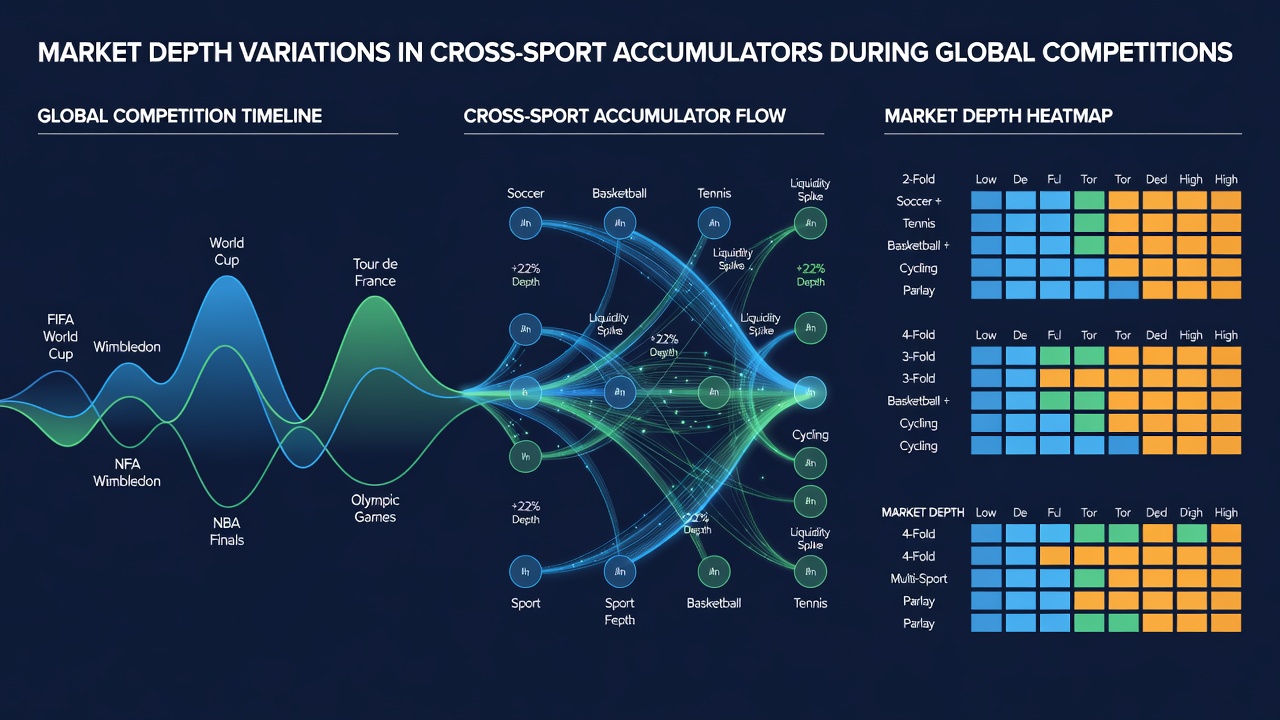
July 2026 features the concluding matches of the Copa América alongside group-stage fixtures from the FIFA World Cup and several ATP and WTA tennis tournaments held on European hard courts. Historical order-flow data indicate that liquidity in basketball-cricket-tennis accumulators contracts most sharply between 14:00 and 18:00 UTC, the window when North American basketball summer-league games, European evening tennis sessions and Caribbean T20 cricket matches overlap. During those hours bookmakers typically reduce maximum stake sizes by between 25 and 35 percent relative to non-overlap periods, according to figures compiled by the Canadian Gaming Association. The same datasets reveal that depth recovers within two hours once the densest fixture cluster concludes, suggesting the contraction stems from risk-management protocols rather than permanent shifts in punter demand.
Statistical Evidence from Multiple Events
A longitudinal study covering six global competitions between 2018 and 2024 found that cross-sport accumulator depth, measured by total available stake capacity, averaged 62 percent of single-sport depth during non-overlap weeks yet dropped to 41 percent during peak overlap. The study controlled for overall betting turnover and still recorded statistically significant reductions, indicating the effect arises from portfolio risk rather than lower interest. Observers further noted that markets combining one high-liquidity sport with two lower-liquidity disciplines exhibited the steepest declines, because the hedging cost for the thinner legs dominates the pricing model.
Operational Adjustments by Market Makers
Bookmakers respond to depth pressure through several documented tactics. Some widen the margin on individual legs to compensate for reduced overall volume, while others temporarily suspend certain accumulator combinations until single-sport markets stabilise. A smaller cohort routes excess liability to third-party re-insurers, an approach tracked in filings submitted to the New Jersey Division of Gaming Enforcement. These operational choices produce observable differences in the speed at which odds update and in the maximum permitted stake displayed to users across competing platforms.
Conclusion
Market depth in cross-sport accumulators contracts and expands according to measurable interactions between overlapping fixture schedules, staggered regulatory obligations and the hedging costs embedded in multi-leg pricing models. Data collected across successive global competitions, including the period surrounding July 2026, confirm that these variations follow repeatable patterns rather than random fluctuation. Understanding the timing and magnitude of depth changes allows market participants to anticipate available stake limits without relying on subjective forecasts.