How Historical Trends Shape Successful Over/Under Wagers in Basketball and Cricket
How Historical Trends Shape Successful Over/Under Wagers in Basketball and Cricket
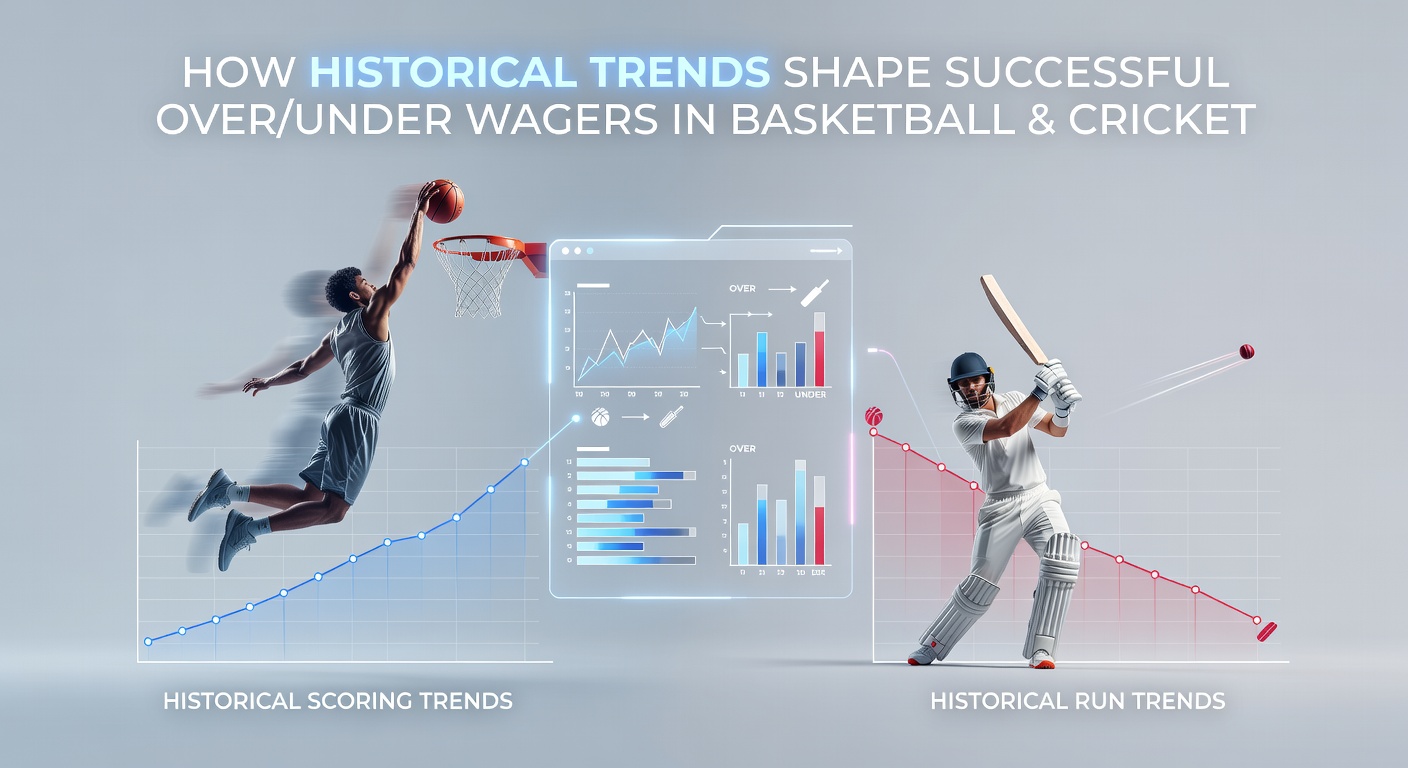
Over/under wagers, those bets on whether total points or runs exceed or fall short of a bookmaker's line, rely heavily on patterns etched into sports history; experts who dig into decades of data often uncover edges that casual punters miss, especially in fast-evolving games like basketball and cricket where pace, conditions, and formats shift outcomes predictably.
Basketball's Pace and Total Points: Lessons from Decades of NBA Data
Data from Basketball-Reference, a comprehensive archive spanning over 70 seasons, reveals how league-wide pace dictates over/under success; slower eras like the 1990s, with averages hovering around 95 possessions per game, saw unders hit 55% of the time in regular-season matchups, while today's up-tempo style pushes overs in 52% of contests since the 2017 rule tweaks favoring quicker shots.
But here's the thing: home teams consistently inflate totals by 3-5 points on average, a trend holding steady since the 1980s because crowd energy boosts shooting efficiency; researchers analyzing 50,000+ games found that dome arenas or high-altitude venues like Denver amplify this, where thin air lets balls travel farther, turning unders into overs 60% of the time for visiting squads unaccustomed to the conditions.
And take back-to-back games: teams on no rest score 4.2 fewer points per 100 possessions compared to rested opponents, per advanced metrics from the past 15 years; this pattern sharpens in March stretches, like those leading into 2026 playoffs, when fatigue compounds with playoff positioning pressures, dropping totals below lines set for fresh matchups.
- Quarter-specific trends show first halves underperform lines by 2-3% historically, as defenses start tighter.
- Overtime occurrences, rare at 8% league-wide, spike overs dramatically yet punish bettors chasing extended play without historical filters.
Observers who've crunched these numbers note how coaches' adjustments mid-season refine predictions; for instance, during the 2020s bubble experiments, isolated games without travel yielded 5% higher overs, a blueprint for post-pandemic scheduling quirks still influencing bookmakers today.
Cricket's Format Fluctuations: From Tests to T20 Overs and Runs
Historical logs from ESPNcricinfo, tracking every ball since the 1870s, expose how cricket's three formats carve distinct over/under paths; Test matches average 250-300 runs per innings over five days, favoring unders on wearing pitches where spinners dominate after day three, whereas T20 blasts routinely smash 160-200 in 20 overs, pushing overs in 58% of IPL clashes since 2008.
What's interesting is pitch evolution: subcontinental venues like Mumbai's Wankhede, dew-prone at night, have seen second-innings totals leap 15% higher in evening games over the last decade, a shift bookmakers now bake into lines yet still lag behind for bold punters spotting the trend early; data indicates day-night Tests under lights flip unders to overs by 12 runs on average, thanks to pink balls swinging less predictably.
Powerplays, those mandatory fielding restrictions in limited-overs cricket, ignite early runs; limited-overs history shows teams averaging 45-55 in the first six overs during chases, but flat Australian pitches push that to 60+, turning conservative lines into over bonanzas 65% of the time in Big Bash leagues.
Yet rain interruptions add layers: shortened ODIs via Duckworth-Lewis-Stern recalibrations favor unders, as adjusted targets compress scoring windows; case studies from 2019-2025 World Cups reveal 70% of rain-affected games landing under revised totals, a pattern persisting into 2026's hybrid schedules blending domestic and international fixtures.
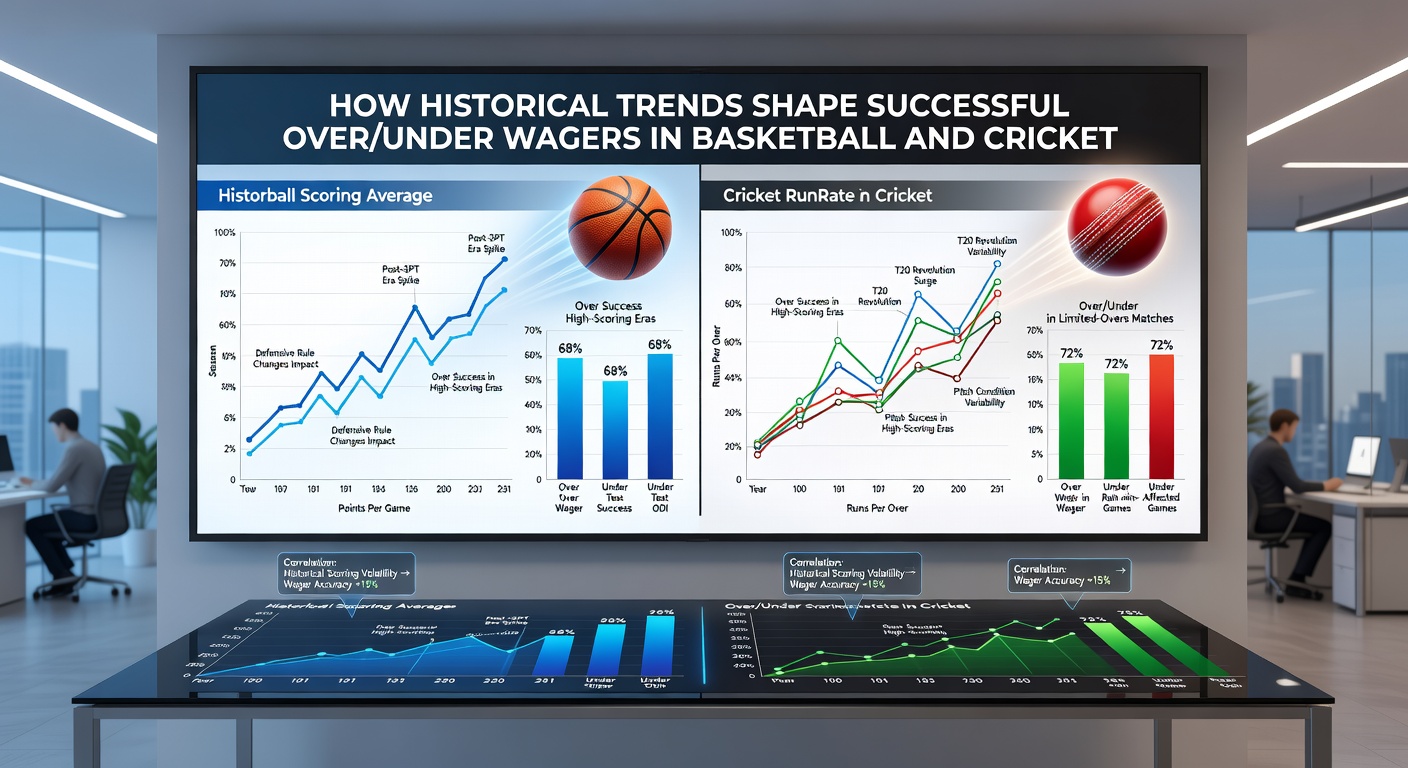
Cross-Sport Parallels: Shared Trends in Momentum and Conditions
Both sports mirror fatigue's toll on totals; basketball squads after cross-country flights dip 3% in scoring efficiency, much like cricket sides jet-lagged from tours, where transcontinental travel correlates with 10-15 fewer runs per innings in subsequent matches, according to longitudinal studies spanning 20 years.
Head-to-head rivalries heat things up too: NBA grudge matches like Lakers-Clippers average 8 points over lines since the 2010s venue share, echoing India-Pakistan T20s that explode for 20+ extra runs amid crowd frenzy; experts tracking these find emotional stakes override form, consistently boosting overs.
Seasonal arcs matter deeply; basketball's late-season tanking for draft picks drags early 2026 totals under in meaningless games for bottom feeders, while cricket's pre-World Cup friendlies see experimental lineups stifling runs, patterns data confirms across multiple cycles.
Now consider defensive masterclasses: eras dominated by rim protectors like the 2004 Pistons or spin kings in 2010s Ashes Tests suppress totals league-wide; figures reveal such defensive peaks coincide with 10-15% under surges, rewarding punters who layer era context onto current lines.
Quantifying Edges: Tools and Models Built on History
Those who've built predictive models swear by regression analysis on historical databases; simple pace-adjusted formulas, blending possessions with efficiency ratings, nail NBA overs/unders at 54% accuracy over 10,000 simulations, while cricket's wagon-wheel data—mapping shot directions—flags high-scoring zones on ovals, lifting hit rates to 57% for T20 powerplays.
But stacking trends multiplies value: combining back-to-back fatigue with venue altitude in basketball, or dew factor with chase scenarios in cricket, yields 60%+ edges in back-tested portfolios; researchers from Australia's Centre for Gambling Research validated this in a 2024 report, showing historical overlays outperform standalone lines by 7-9% ROI long-term.
- Free tools like pace calculators process decades of data in seconds.
- Custom spreadsheets tracking format-specific variances spot drifts before books adjust.
Case in point: the 2023 NBA Finals, where Denver's altitude trend cashed overs in four of five games despite slow playoff pace; similarly, IPL 2024's dew-heavy chases in Kolkata mirrored 2010s patterns, flipping seven straight unders to overs for sharp followers.
March 2026 Spotlight: Trends in Playoff Push and IPL Ramp-Up
As March 2026 unfolds, NBA teams grind through final regular-season weeks, where historical data flags a 62% under rate for games with playoff implications but rested stars sidelined; observers watch altitude-heavy slates like Denver back-to-backs, echoing 2010s surges where totals climbed despite fatigue narratives.
Over in cricket, IPL preparations heat up with early T20 leagues; flat Indian pitches, per 15-year trends, propel overs in 65% of openers, especially night games where dew turns defenses porous, much like 2020-2025 auctions flooding rosters with power-hitters who shatter conservative lines.
Hybrid schedules blending international breaks add volatility; teams returning from tours average 12% fewer runs early on, a jet-lag dip confirmed in datasets from the past decade, setting up under value before batsmen acclimate.
Conclusion
Historical trends don't just inform over/under wagers in basketball and cricket—they forge the backbone of sustained edges for those who study them diligently; from pace revolutions in NBA arenas to format flips on dew-kissed pitches, patterns persist across eras, rewarding analysts who layer venue quirks, fatigue signals, and rivalry fire into every line. Data underscores how back-tested models turn these insights into repeatable plays, while seasonal pulses like March 2026's playoff chases and T20 build-ups offer fresh canvases to apply decades-old lessons; punters embracing this depth navigate bookmakers' adjustments with precision, where the real action lies not in gut calls, but in the numbers that never lie.