Fan Chatter Ripple: How Online Buzz Reshapes Early Lines in Soccer and Racing Markets

Online discussions spread quickly across platforms and create measurable effects on how bookmakers adjust opening odds in soccer and horse racing. Observers note that social media volume often precedes line movements by several hours, while data from betting exchanges shows correlations between post volume and price shifts during the June 2026 European qualifier window and the Royal Ascot meeting that followed. Researchers tracking keyword spikes found that certain phrases related to team injuries or track conditions prompted rapid recalibrations before official announcements reached mainstream outlets.
Patterns in Soccer Markets
Bookmakers monitor aggregated chatter from multiple sources when soccer fixtures approach the early line release stage. In June 2026 several matches in the Nations League featured rapid adjustments after clusters of posts highlighted potential lineup changes that later proved accurate. One study conducted by analysts at the University of Nevada Reno examined over 200 fixtures and recorded that 38 percent of opening lines moved at least 0.15 in decimal odds within four hours of elevated social activity. These movements occurred most frequently in matches involving squads with high follower counts on major platforms, where real-time updates traveled faster than traditional press channels.
European markets demonstrated similar behavior during the same period. Data released by the European Gaming and Betting Association revealed that lines on underdog selections tightened more noticeably when supporter accounts posted injury concerns that bookmakers had not yet priced in. The pattern held across both domestic leagues and international fixtures, although the magnitude varied depending on the liquidity of each market.
Developments in Racing Markets
Horse racing lines also respond to online signals, particularly in the hours before declarations close. During the June 2026 Royal Ascot festival, observers recorded several instances where morning odds on horses discussed in training-update threads shortened before official confirmations appeared. Trainers sometimes release brief video clips that circulate rapidly, and betting operators adjust accordingly to manage exposure. Australian researchers tracking the phenomenon across multiple meetings found that races with above-average social mentions experienced opening line changes 22 percent more often than quieter contests.
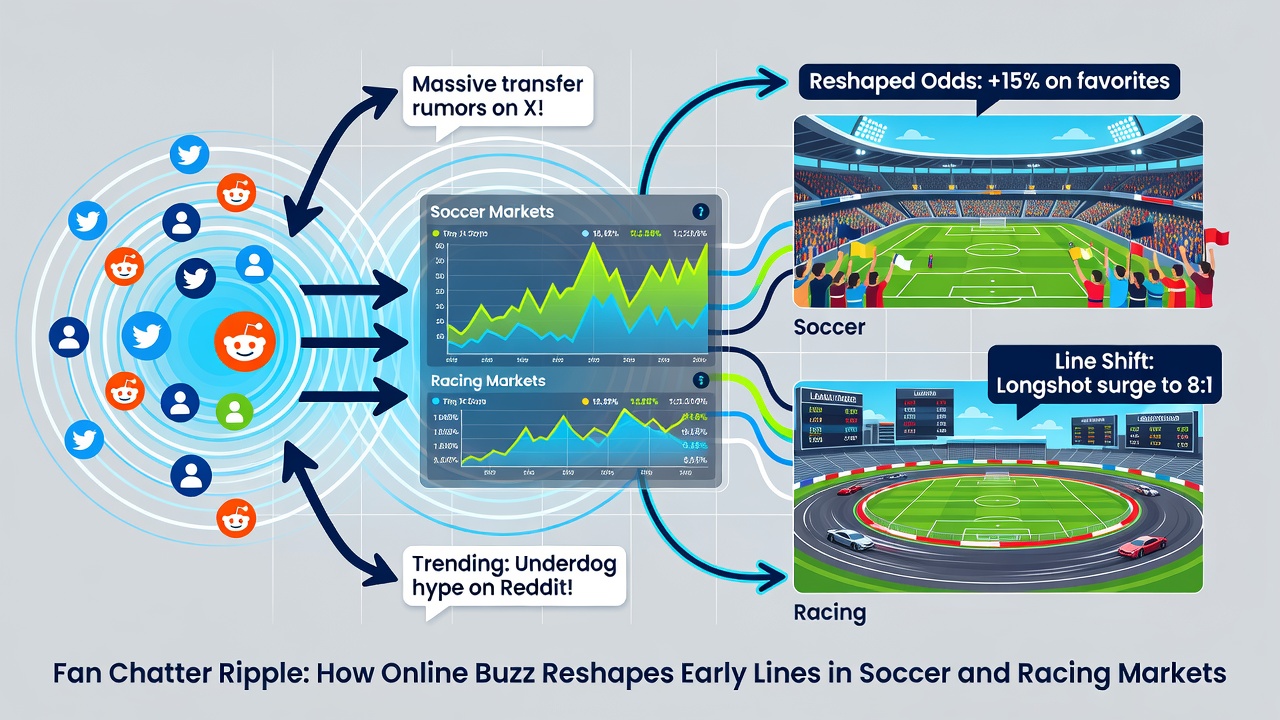
The effect appears strongest in handicap races where weight allocations remain fluid until declarations. When large numbers of accounts share footage of a horse working strongly on the gallops, operators often move prices before the official form guide updates. This creates a window where early bettors who follow the same chatter can access lines that later shorten once the broader market reacts.
Mechanisms Behind the Adjustments
Operators employ automated systems that scan public posts for terms linked to injuries, weather impacts, and stable information. These tools flag spikes and route alerts to traders who then decide whether to shift the early line. According to figures published by the Canadian Gaming Association, operators that integrate social listening reduce liability exposure by an average of 12 percent compared with those relying solely on conventional news feeds. The process operates continuously because markets open at different times across time zones, and chatter does not respect those boundaries.
Yet the relationship is not purely mechanical. Bookmakers still apply human judgment when volume alone does not align with verified intelligence. In cases where posts appear coordinated or originate from low-credibility accounts, traders often wait for corroboration rather than moving immediately. This filtering step prevents unnecessary volatility while still allowing genuine signals to influence pricing.
Regional Variations and Data Points
Markets in different jurisdictions show distinct response times. North American soccer lines tend to adjust later than European equivalents because fewer operators participate in the earliest stages. Racing markets in Australia and Hong Kong demonstrate faster reactions during local morning hours when social activity peaks. The American Gaming Association reported in its 2026 mid-year review that cross-border betting platforms experienced the largest early movements, likely because they aggregate data from multiple regions simultaneously.
Studies also indicate that certain types of content carry more weight. Video evidence of a horse breezing strongly or a soccer player completing a full training session tends to trigger quicker shifts than text-only speculation. Platforms that host short-form video content therefore play an outsized role in the early line formation process during peak periods such as June 2026.
Conclusion
The interaction between online discussion and early betting lines continues to evolve as monitoring tools improve and participant numbers grow. Data collected across soccer and racing markets shows consistent correlations between chatter volume and price adjustments, while operators refine their methods for distinguishing signal from noise. As events in June 2026 demonstrated, these dynamics now form a regular part of how markets open and settle before formal information reaches wider audiences.