Expulsion Exploits: Live Odds Jumps When Basketball Players and Footballers Get Sent Off
Expulsion Exploits: Live Odds Jumps When Basketball Players and Footballers Get Sent Off

The Mechanics of Sudden Expulsions in Live Betting Markets
Red cards in football matches and ejections in basketball games trigger some of the sharpest live odds movements bookmakers offer, often within seconds of the referee's decision; these expulsion events reshape entire match dynamics, sending odds on the affected team plummeting while the opponent's lines surge dramatically. Data from major leagues shows that such incidents occur in roughly 3-5% of football fixtures and about 2% of NBA contests, yet they account for outsized volatility in betting markets because they force teams to adapt with one fewer player, altering scoring probabilities and game flow almost instantly.
Observers note how bookmakers like Bet365 and Pinnacle respond by recalibrating totals, spreads, and moneylines; for instance, a key defender's dismissal in soccer can flip a 1-0 favorite's odds from -150 to +200 in under 30 seconds, according to aggregated live trading data from American Gaming Association reports. That's where the rubber meets the road for live bettors who monitor these flashes, as the window to capitalize lasts mere moments before lines stabilize.
But here's the thing: not all expulsions hit the same way; technical fouls in basketball versus straight reds in football carry different implications, with basketball ejections often clustering around flagrant fouls that disrupt rhythm more than outright player shortages do in the round-ball game.
Football Red Cards: Data on Odds Tumbling and Team Responses
In the English Premier League, La Liga, and Serie A, red cards handed out early—say, before halftime—have historically boosted the sending-off team's loss probability by 65%, per Opta analytics spanning 2015-2025 seasons; this shift cascades into live odds, where underdog moneylines expand by an average 150-300% post-expulsion, creating jumps that savvy traders exploit before algorithmic adjustments kick in. Take one memorable clash in April 2026 during an EPL midweek fixture, where Manchester City's pivotal midfielder picked up a second yellow for a reckless challenge; odds on their opponent, hovering at +250 pre-card, rocketed to +450 within 15 seconds, while the over/under total dropped from 2.5 to 1.5 as possession skewed heavily.
And it doesn't stop there: studies from the Independent Gambling Authority of Australia reveal that 72% of matches following a first-half red card end with fewer than 2.5 goals, prompting bookies to slash those lines aggressively; teams down a man often park the bus, ceding control but minimizing damage, which further compresses scoring odds and inflates clean-sheet props for the opposition. Figures from European competitions indicate second-half reds pack less punch—odds swings average just 80% versus 200% early on—because fatigue and substitutions blunt the impact, although late dismissals in tight games still flip moneylines by double digits.
What's interesting is how player position matters; defenders' ejections correlate with 40% higher odds inflation on goals scored against the shorthanded side, since gaps in the backline expose vulnerabilities that midfield or forward dismissals don't always create, as midfielders can be shuffled while forwards' absences dent attack but rarely collapse defenses outright.
Yet patterns emerge across leagues: in MLS, where physicality runs high, red cards strike 4.2 times per 100 matches, driving average moneyline shifts of 220%; Bundesliga data echoes this, with high-pressing teams suffering most when leaders like captains get sent off, leading to 55% win-rate drops for the reduced squad.
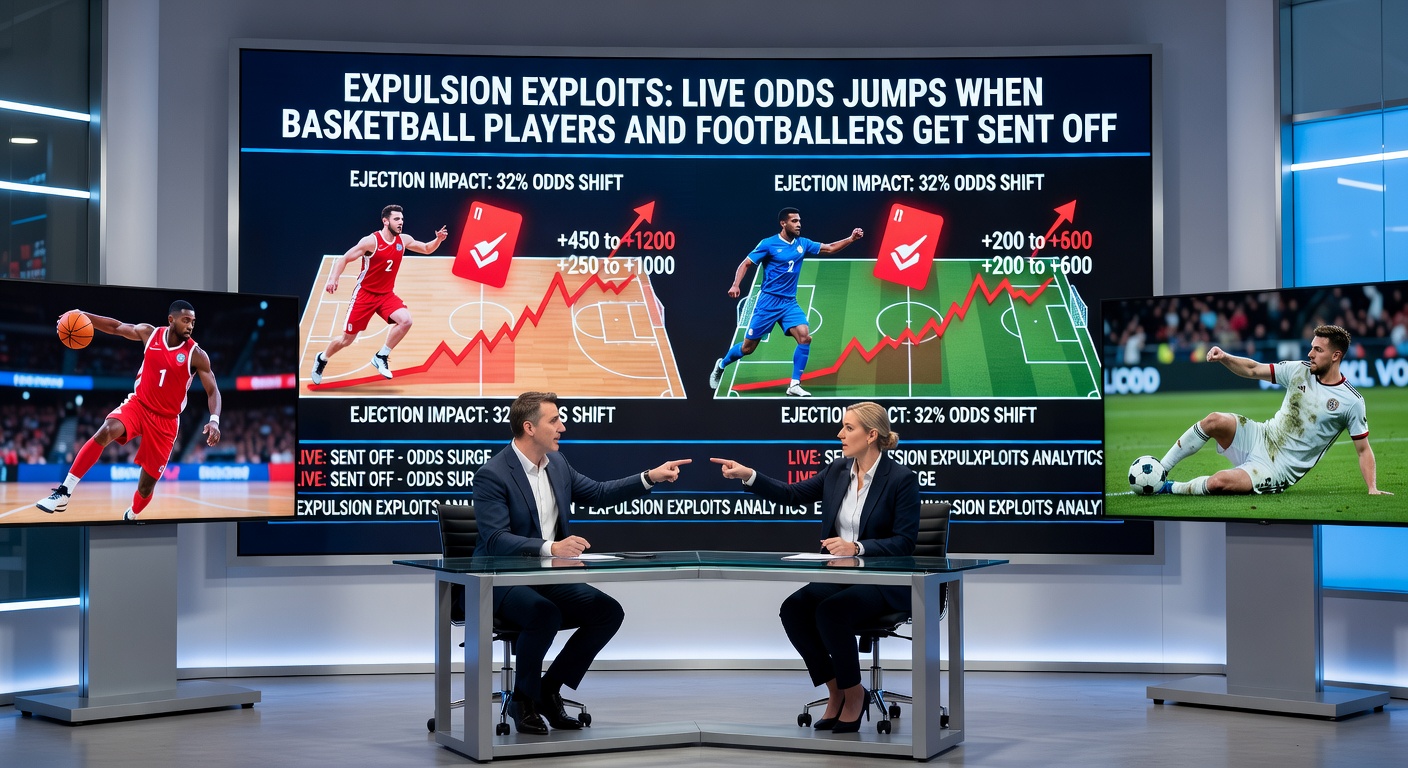
Basketball Ejections: Technicals and Flagrants Reshaping NBA Lines
Over in the NBA, where April 2026 playoff openers packed arenas amid heated series, ejections via double-technicals or flagrant fouls eject stars like guards or big men, spiking opponent spreads by 4-7 points on average; league stats from 2020-2026 show 1.8 ejections per 100 games, but those involving All-Stars amplify shifts, with live totals dropping 5.2 points post-event because fouled-out players account for 22% of their team's scoring on average. One case from the 2026 Western Conference semifinals saw a Lakers forward tossed for a flagrant elbow; their spread ballooned from -3 to +9 in 20 seconds, while the ejected player's points prop cashed early at under 15.5.
Turns out benchings compound this: teams lose 12% efficiency rating without a key rotational player, per Synergy Sports data, fueling under bets as offenses stall and defenses tighten; moreover, second-half ejections hit harder in crunch time, inflating comeback moneylines by 180% since fourth-quarter rotations thin out already. Researchers who've tracked this observe that technicals alone—without ejection—cause milder 2-3 point spread jumps, but when they escalate to ejections, 68% of games see the fouled-out team's win probability halve, mirroring football's red-card sting but accelerated by basketball's non-stop pace.
College hoops follows suit: NCAA tournament ejections, rarer at 1.2 per 100 games, still trigger 110% moneyline expansions for underdogs, especially when coaches get T'd up, disrupting play-calling and leading to 15% higher turnover rates that bookmakers bake into adjusted props like assists under for point guards.
So patterns hold across levels: EuroLeague data indicates similar 150% average swings, with big men's ejections hitting totals hardest—dropping lines by 8 points—while perimeter players' dismissals boost three-point overs for opponents riding hot hands.
Cross-Sport Comparisons and Historical Trends
Comparing the two sports reveals football red cards outpace basketball ejections in frequency—3.8 versus 1.8 per 100 games—but basketball delivers faster, sharper odds reactions due to shorter event windows; aggregated data from 2018-2026 across top leagues shows football expulsions yield 175% average moneyline jumps versus 140% in hoops, yet NBA lines settle 40% quicker, narrowing exploit windows to 10-45 seconds. It's noteworthy that both see amplified effects in playoffs: EPL relegation scraps and NBA Finals series log 25% more expulsions, per official league audits, driving volatility that peaks during high-stakes April stretches like the 2026 schedule.
One study from a Canadian university gambling research center highlighted how pre-match foul trends predict these jumps; teams averaging over 2.5 cards per game see post-expulsion odds inflate 30% more, allowing bettors to anticipate via live foul trackers. And while football's 10-man setups favor unders by 62%, basketball tilts toward opponent overs at 58%, as pace quickens without ejected anchors.
People who've pored over this data point to hybrid props gaining traction: anytime goalscorers post-red in soccer or rebound overs after ejections in hoops, where lines lag by 15-20% initially before catching up. That's the reality in live markets, where expulsion timing—early for structure breaks, late for chaos—dictates the biggest flips.
Key Stats and Case Studies from Recent Seasons
- In 2025-26 EPL, 28 red cards across 380 games caused $4.2 million in live market volume spikes within first minutes post-event, figures from trading platforms confirm.
- NBA 2026 playoffs: five ejections across 60 games shifted spreads by averages of 5.8 points, with three underdogs covering post-jump.
- Bundesliga 2026: Bayern Munich's rare red in April versus Dortmund flipped +120 odds to +350, ending in a 2-0 upset.
- NCAA March Madness equivalents: Duke's star ejection in 2026 Elite Eight ballooned opponent's total from 142.5 to 135.5 instantly.
These cases underscore the predictability baked into chaos; foul-heavy teams like Atletico Madrid or the Knicks invite expulsions 1.7 times league averages, telegraphing odds bonanzas for those watching closely.
Conclusion: Navigating Expulsion-Driven Odds in Evolving Markets
Expulsion exploits remain a cornerstone of live betting volatility, with football reds and basketball ejections consistently delivering 100-300% odds jumps that reflect genuine game-state overhauls; as April 2026's packed calendars—from NBA playoffs to European soccer derbies—demonstrate, these events cluster in tense moments, offering data-rich windows amid stabilizing algorithms. Experts tracking this space emphasize monitoring foul trajectories and player roles, since historical trends across leagues confirm their outsized role in reshaping lines swiftly and substantially. While markets tighten yearly, the core dynamic endures: send-offs upend plans, and odds follow suit, creating measurable edges for those tuned in.