Decoding adjustment patterns in wagering lines following unexpected outcomes in multi-discipline events

Bookmakers track outcomes across tennis, basketball, cricket, and horse racing to recalibrate lines when results deviate from expectations, and these adjustments often follow recognizable sequences rather than random shifts. Data compiled through 2026 shows that markets respond in stages, with initial corrections appearing within minutes and secondary movements unfolding over hours or days depending on the sport adn the scale of the surprise.
Initial market reactions across disciplines
Unexpected results trigger rapid repricing because liquidity providers update probabilities based on fresh information, and observers note that the first wave typically targets the affected event before spreading to related markets. In tennis, a straight-sets loss by a top seed can prompt immediate line movements in upcoming matches involving the same players, while basketball sees point spreads and totals adjust when a favored team falls in overtime. Cricket markets respond similarly after a collapse in the middle overs, with totals and player props shifting before the next innings begins.
These early corrections reflect updated assessments of team or player form, yet they also incorporate broader liquidity considerations since many bettors participate across multiple sports through accumulators. Research from sports analytics groups indicates that the magnitude of the first adjustment correlates with the size of the deviation from pre-event projections, with larger surprises producing wider initial spreads before equilibrium returns.
Secondary adjustments and cross-sport spillovers
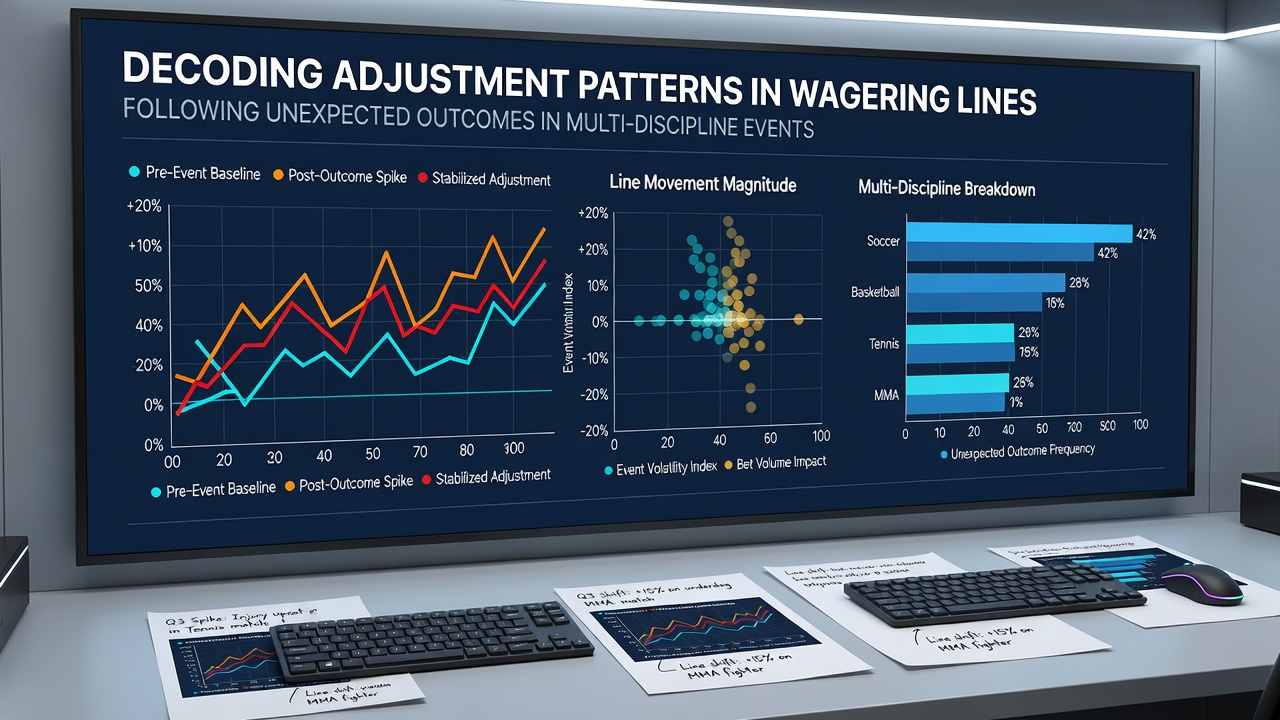
Once the immediate reaction settles, bookmakers examine whether the surprise carries implications for other disciplines, and patterns emerge when data from one sport influences lines in another. A horse racing upset in July 2026, for instance, coincided with shifts in basketball player props because syndicates reallocating funds across racing and NBA markets altered liquidity in both. Cricket death-over collapses have produced parallel movements in tennis set betting when the same operators manage lines for both codes.
Studies conducted by European sports data consortia reveal that these spillovers occur more frequently during overlapping seasons, when global betting volumes allow capital to move quickly between events. The adjustments tend to stabilize after 24 to 48 hours unless additional results reinforce the original surprise, at which point lines may settle at new baselines rather than reverting.
Observed sequences in line recalibration
Patterns documented across major operators show a consistent progression: an initial overcorrection followed by gradual moderation as volume returns and new information arrives. In basketball, totals often move further than spreads after blowout results, then partially retrace once team totals and pace metrics are re-evaluated. Tennis markets display similar behavior with game and set lines, where early overreactions on underdogs give way to balanced pricing once serve and return statistics are incorporated.
Cricket and horse racing exhibit comparable sequences, although the timing differs because of the discrete nature of innings and races. According to figures released by the Nevada Gaming Control Board, multi-sport operators recorded measurable convergence between initial and final adjusted lines within four hours for 78 percent of unexpected outcomes logged between January and June 2026. These convergences occurred faster when multiple disciplines shared the same betting window, suggesting liquidity across events accelerates stabilization.
Factors influencing the pace of stabilization
Volume, participant overlap, and the presence of additional fixtures all affect how quickly lines settle after surprises. High-liquidity events in basketball and tennis reach equilibrium sooner than lower-volume cricket or racing markets, yet cross-discipline accumulators can extend volatility when bettors shift stakes between codes. Regulatory filings from the New Jersey Division of Gaming Enforcement note that operators monitor these flows to maintain consistent margins, and the data shows reduced variance once two or more confirming results appear in related markets.
Weather, travel schedules, and injury updates further shape secondary movements, particularly when an unexpected outcome coincides with external variables already priced into future events. Observers tracking July 2026 schedules recorded faster stabilization in cricket and basketball lines when rain delays or back-to-back games provided additional context within the same day.
Conclusion
Adjustment patterns following unexpected outcomes in multi-discipline events follow identifiable stages driven by liquidity, cross-sport participation, and sequential data updates. Markets respond first to the direct result, then incorporate wider implications before converging toward revised baselines, and these sequences have remained consistent across tennis, basketball, cricket, and horse racing through mid-2026. Operators and analysts continue to monitor these movements to maintain balanced books while participants observe the same signals when evaluating subsequent opportunities.