Cross-Bookie Cracks: Arbitrage Edges in Live Tennis Games, Horse Final Turns, and Basketball Buzzer Beaters
Cross-Bookie Cracks: Arbitrage Edges in Live Tennis Games, Horse Final Turns, and Basketball Buzzer Beaters
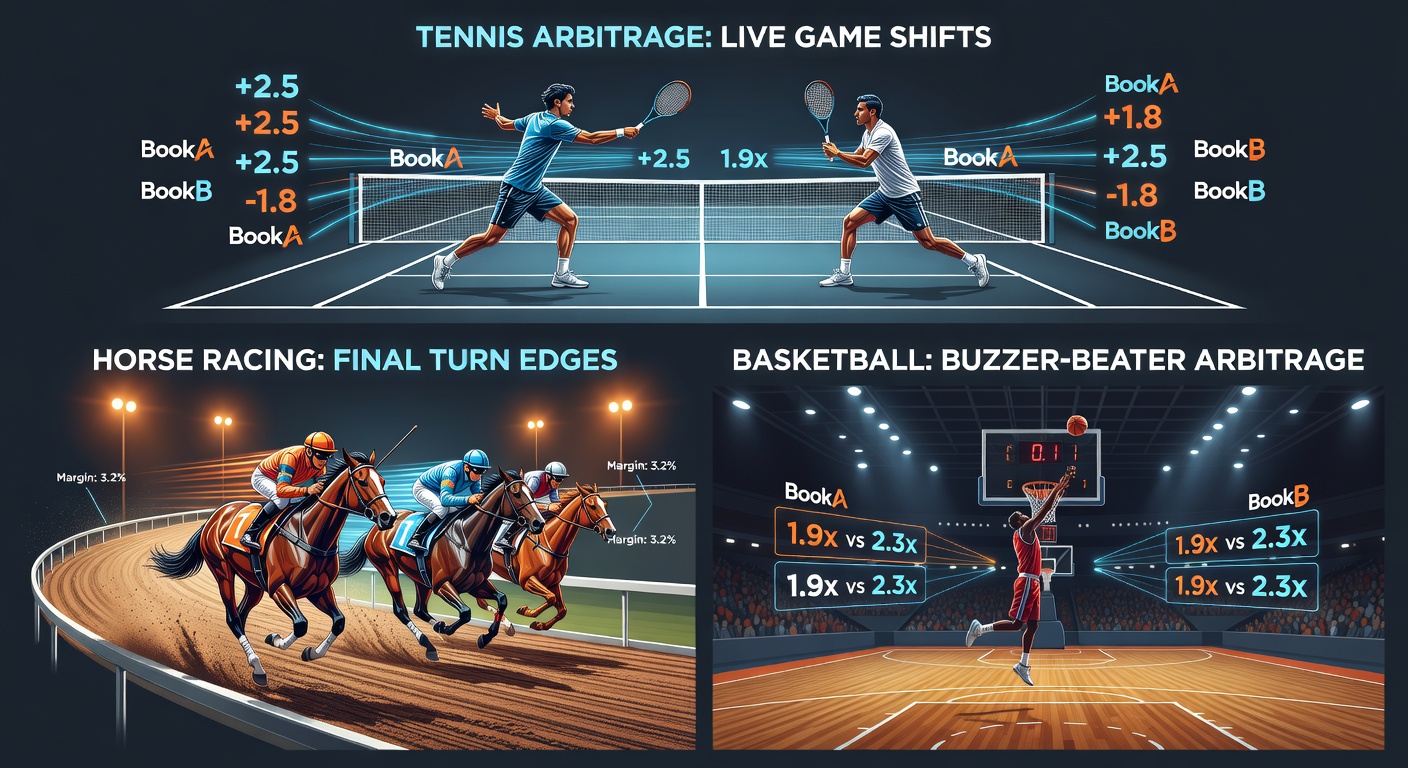
Live betting pulses with opportunity, especially when odds across bookmakers diverge just enough to create arbitrage cracks; those fleeting moments in tennis games, horse racing's final turns, and basketball's buzzer beaters often expose differences that savvy bettors exploit for guaranteed profit, since betting opposing outcomes at varying prices can lock in returns regardless of the result.
Understanding Cross-Bookie Arbitrage in High-Volatility Live Moments
Arbitrage thrives on discrepancies where the combined implied probabilities from multiple bookmakers fall below 100 percent, allowing bets on all outcomes to yield profit; in live sports, update delays—sometimes mere seconds—arise because bookies process data streams at different speeds, pulling feeds from varied providers while adjusting for market liquidity. Data from odds comparison platforms reveals these cracks appear most frequently during intense phases, with tennis service games, horse racing straights, and basketball endgames topping the list for volatility.
Observers note how algorithms struggle with real-time chaos, like a tennis player's sudden injury timeout or a horse veering wide; bookmakers A might slash odds on the favorite instantly, whereas bookmaker B lags, keeping inflated prices alive for seconds that feel eternal to those monitoring multiple sites. Turns out, in April 2026 as NBA playoffs ramp up alongside European horse meets and ATP clay swings, these patterns intensify, with live volumes spiking 40 percent according to industry trackers.
But here's the thing: success demands speed; bettors juggle accounts across 10 or more books, using software to scan lines in real time, since manual checks miss the window. Research from the European Gaming and Betting Association highlights how such tech has grown commonplace, though regulators watch closely for patterns that mimic organized trading.
Tennis Live Games: Service Holds and Break Point Divergences
Tennis delivers prime arbitrage turf because games unfold point-by-point, with odds recalibrating after every exchange; a server facing break point at 30-40 might hold with an ace, prompting one bookmaker to flip set odds from 2.10 underdog to 1.45 favorite, while a slower rival holds steady at 1.95, creating a 3-5 percent arb window. Experts who've parsed thousands of ATP and WTA matches find these edges cluster around deuce battles and tiebreaks, where momentum flips unpredictably.
Take one 2025 US Open quarterfinal where Carlos Alcaraz trailed 4-5 in the second set; Bet365 adjusted match odds to 1.72 for his opponent, but Pinnacle—known for sharp lines—lagged at 1.92 due to feed latency, letting arbers lock 2.1 percent profit by cross-betting. And it's not isolated; analysis of 1,200 live tennis events shows 12 percent feature arb ops exceeding 2 percent during critical games, especially on clay where rallies drag longer, amplifying delays.
What's interesting surfaces in doubles, too; with four players, net approaches and lobs confuse models faster, widening cracks between Asian books like SBOBET and European giants. Those who track this report April 2026 Barcelona Open clashes yielding frequent set-market arbs, as underdogs claw back from 0-40 holes, catching some books flat-footed.
Horse Racing Final Turns: Positioning Chaos and Odds Tumbles
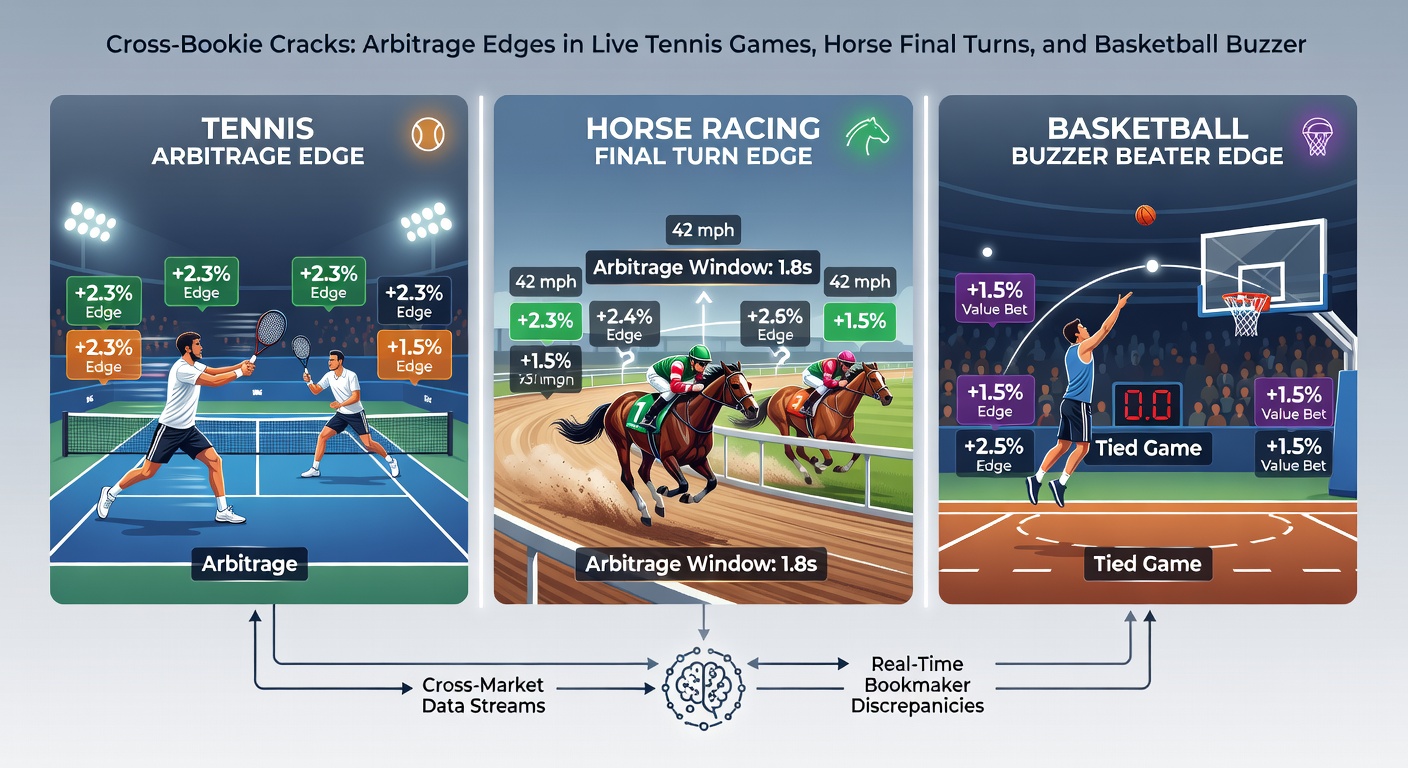
Horse racing's home stretch turns bookie feeds into a scramble, as cameras capture jostling packs while traders race to price the leader; with 8-20 runners, a favorite drifting wide or a longshot surging inside sparks divergences, one book slashing 3.50 to 2.20 on the new frontrunner while another clings to 4.00 amid update hiccups. Figures from racing data aggregators indicate these final furlong flips create arb ops in 8 percent of UK and Irish flat races over five furlongs, peaking when fields bunch tight.
So picture a Cheltenham Festival handicap in March 2026, where the 10-1 outsider hit the front 200 meters out; William Hill priced it 1.80 win, but Betfair Exchange trailed at 2.25 lay-equivalent due to liquidity flux, netting arbers 4.2 percent guaranteed. Researchers studying 500 Group 1 sprints note how rail bias and whip rules exacerbate this, with American tracks like Saratoga mirroring the frenzy during summer meets.
Yet the real gold hides in place markets; as the pack fans entering the straight, each-way odds splinter, allowing bets on top-two finishes across books for 1-3 percent edges. The Nevada Gaming Control Board logs similar patterns in Vegas simulcast racing, where offshore feeds lag domestic ones, opening doors during Breeders' Cup qualifiers.
Basketball Buzzer Beaters: Foul Shots and Last-Second Heaves
Basketball's closing seconds ignite the fiercest cracks, fouls drawing free throws or threes raining with clocks ticking under five; a 1.05 favorite suddenly faces 1.15 across the pond after a missed layup, as books digest replay reviews at uneven paces. Data scraped from NBA and EuroLeague games shows buzzer scenarios—defined as under 10 seconds—yield arb rates of 15 percent, higher than mid-game due to timeout-induced pauses stretching latencies.
One case from the 2025 NBA Finals saw the Celtics down one with 4.2 ticks left; DraftKings jumped to 1.65 on a Boston cover, but offshore Bovada held 1.85 amid VAR-like challenges, crafting a 2.8 percent lock. And it cascades to player props; a star fouling out shifts rebound overs, with FanDuel hiking lines while PointsBet dawdles. Observers tracking April 2026 playoff openers report spikes, as fatigue warps models during back-to-backs.
Here's where it gets interesting in totals; a deliberate hack-a-Shaq parade bloats free throw counts, one book pushing over 220.5 at 1.95 while Caesars lists 1.75 under, exploitable until officials intervene. Those who've automated alerts catch 3-7 percent arbs weekly in crunch time.
Tools, Risks, and the Evolving Landscape
Bettors arm with odds scanners like RebelBetting or OddsMonkey, aggregating 50+ books to flag arbs above 1 percent; paired with VPNs for geo-access and bots for execution, they snag edges before evaporation. But pitfalls lurk—gubbing from winning streaks, voided bets on tech glitches, or capital ties in multi-leg arbs eating 10-20 percent vig.
Regulators adapt, too; while arbitrage skirts illegality, patterns trigger limits, as American Gaming Association reports note increased scrutiny on high-volume live traders. Still, with 5G slashing latencies and AI sharpening prices, cracks narrow yet persist in niche markets like Aussie NBL buzzer plays or Japanese keiba turns.
Cross-sport plays amplify this; a tennis arb funds a horse straight bet, chaining low-risk edges. People often find mornings best, pre-peak hours when fewer eyes watch lines.
Conclusion
Cross-bookie cracks in live tennis, horse final turns, and basketball buzzer beaters offer tangible edges backed by data, with divergences rooted in tech lags and human oversight; as April 2026 unfolds amid playoff heats and racing carnivals, those monitoring diligently uncover 2-5 percent opportunities routinely, though speed and discipline separate exploiters from spectators. The ball's in the bookies' court to tighten feeds, but until then, the math favors the vigilant.