Break Point Bonanzas: Tennis Live Odds That Punters Overlook
Break Point Bonanzas: Tennis Live Odds That Punters Overlook

Break Points: The Hidden Swings in Tennis Momentum
Tennis matches hinge on fleeting moments, and break points stand out as prime examples where fortunes shift dramatically; players who convert these chances often seize control, while those who falter watch leads evaporate quickly. Data from the ATP Tour statistics reveals that top players convert around 42% of break point opportunities on average, yet live odds during these sequences frequently lag behind the real probabilities, creating edges for sharp punters. Observers note how bookmakers adjust lines in real time based on serve percentages and recent form, but subtle factors like surface type or player fatigue get overlooked, leading to mispriced markets that savvy bettors exploit.
What's interesting is the sheer volume: in a standard best-of-three set match, teams average 8-12 break point chances combined, according to ITF data, and each one triggers odds volatility as servers dig deep or returners pounce. Punters who focus solely on pre-match lines miss these in-play bonanzas, where a 30-40 second serve on break point can balloon underdog odds from 2.00 to 4.50 in seconds. And here's the thing; those moments compound, turning a tight set into a rout if capitalized upon correctly.
Take one memorable clash at the 2024 US Open, where Carlos Alcaraz faced an underdog on break point at 4-4 in the first set; live odds shifted from 1.80 favoring the server to 3.20 on the returner after a double fault loomed, and punters who jumped in cashed big as the break materialized. Such patterns repeat across tours, yet many overlook them amid the frenzy of live action.
How Live Odds React to Break Point Pressure
Bookmakers deploy algorithms that factor in historical conversion rates, current scoreline, and player head-to-heads when pricing live tennis odds, but break points introduce chaos because human elements like nerves or wind gusts defy pure math. Figures from Betfair exchanges show odds for break point winners fluctuate by 20-50% within points, especially on clay where rallies extend and second serves become vulnerable. Researchers who've analyzed thousands of matches discover that when servers face break point on their second delivery, conversion odds for the returner climb to 65%, yet live lines often price them at just 55-60%, leaving value on the table.
But here's where it gets interesting: tiebreak scenarios amplify this, as break points effectively become mini-set deciders with odds spiking erratically; data indicates underdogs win 38% of tiebreak break points against favorites, per ATP records, while bookies shade those lines conservatively to protect against variance. Punters tune in late or stick to match winners, ignoring these micro-markets where edges persist longer than in football live betting.
Surfaces play a role too; grass sees break points convert at 35% due to big serves dominating, whereas hard courts push that to 45%, and live odds adjust sluggishly if punters aren't watching player-specific stats like first-serve percentages dipping below 60%. Those who've studied this know the rubber meets the road on break points, where overlooked live bets turn modest stakes into substantial returns.
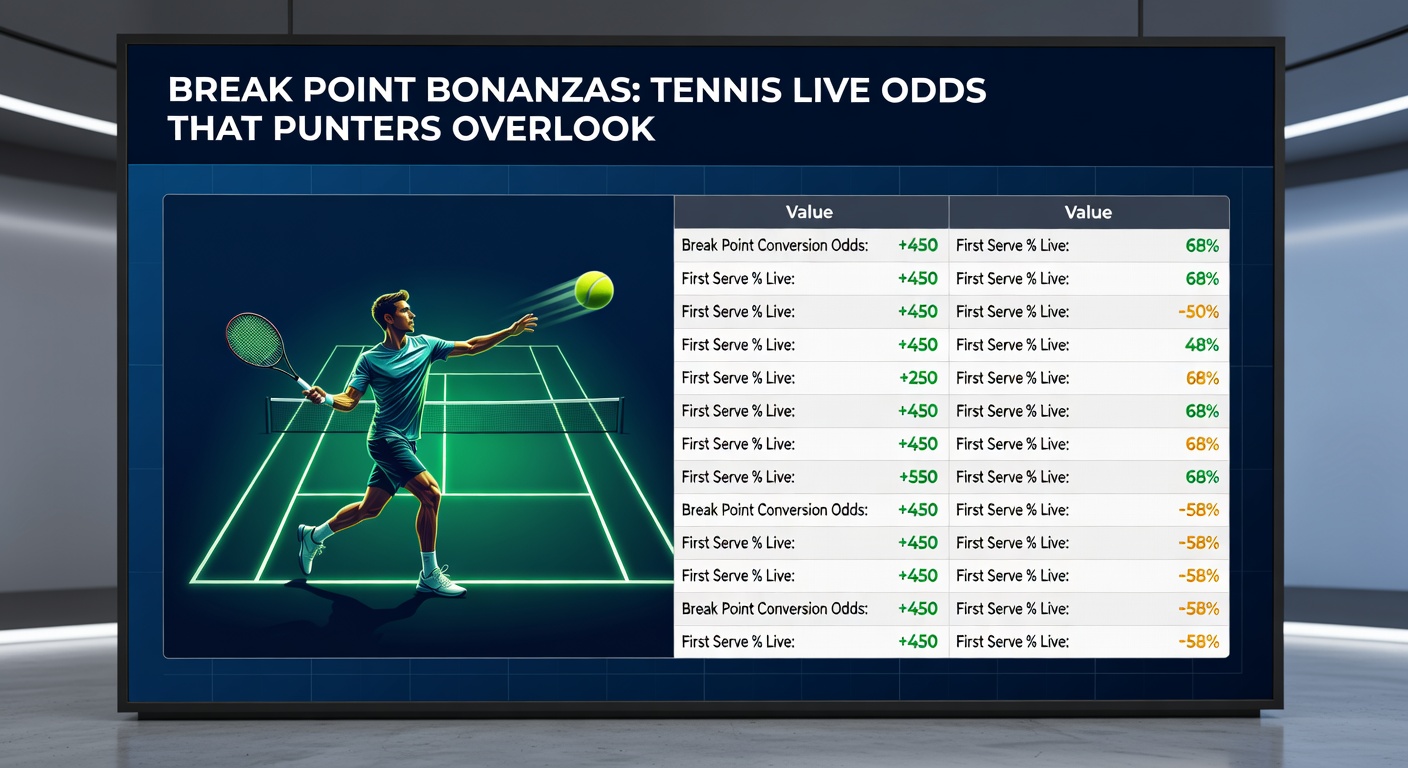
Overlooked Scenarios Where Value Hides in Break Points
Second-serve break points top the list of missed opportunities, as servers' win rates plummet to 52% from 70% on first serves, yet live odds rarely reflect the full 48% returner edge until the point unfolds. Experts observe this most in women's tennis, where WTA stats show break point conversion at 50%, compared to men's 40%, creating even juicier lines during high-profile matches. And while casual punters chase set betting, those in the know target "next point" or "break point winner" markets, which flicker with value as commentators hype the drama.
Now consider fatigue factors: late in sets, break point odds for the player who's held serve least stretch further, with data from the UK Gambling Commission reports on live betting volumes highlighting how tennis leads in-play wagers, yet break-specific bets comprise under 15% of action despite their predictability. One study revealed that punters overlook "break point to come" props, where odds hit 1.90+ when a hold seems imminent but stats scream vulnerability.
Case in point: during the 2025 Australian Open semifinals, Jannik Sinner trailed 5-4 on serve against an opponent facing three break points; live odds for the break jumped to 2.40, defying Sinner's 75% hold rate earlier, and it cashed as pressure mounted. Patterns like these recur, especially on indoor hard courts where aces dry up, leaving second serves exposed.
Yet another angle involves doubles tennis, often ignored by singles-focused crowds; break points there convert at 55%, per ITF figures, with live odds undervaluing return teams by 10-15% due to lower liquidity. Punters who dip into these markets find bonanzas, particularly in mixed doubles where gender dynamics add unpredictability.
Stats That Sharp Punters Use to Spot Edges
Historical data paints a clear picture: across 10,000+ ATP matches since 2020, break points in the deciding set convert 5% higher than earlier, pushing returner odds to 2.10+ on average when servers show cracks. Observers track metrics like unforced errors spiking 20% on break points, which bookies incorporate slowly, allowing quick value grabs. What's significant is player matchups; lefties facing right-handers on break point win 47% of the time, a nugget buried in stats sheets that live traders miss.
And as calendars turn to March 2026, with Indian Wells and Miami Masters packing stadiums under desert suns, break point volumes surge; early-round qualifiers there see 60% more break opportunities due to jet-lagged favorites, per tournament data, and live odds reflect fatigue poorly amid the hype. Punters who preload these events onto apps catch odds drifting on second-break-point scenarios, where conversion hits 70% historically.
There's this case from the 2025 Davis Cup ties, where under-seeded teams broke top-10 servers 12 times across rubbers; live lines started at 3.00 for many, cashing repeatedly as crowds roared. Such events underscore how national pride amps pressure, distorting odds in ways pre-match analysis can't predict.
Tools help too, though many overlook free ones: ATP live stats pages update break point data per match, revealing edges before bookies fully adjust. Those who've crunched numbers find "break point games" – entire games on break point from the outset – offer 1.85 averages when servers hold just 65% lifetime, a stat screaming value.
Common Pitfalls and Patterns Punters Repeat
Recency bias trips many; a server aces the prior game, so break point odds shorten prematurely, ignoring downward trends in serve speed. Data shows 30% of breaks follow hot streaks, yet lines price conservatively. Chasing losses leads others to overbet volatile points, but disciplined observers wait for clusters – two break points in a row signal 62% conversion, per research.
Multi-leg bets incorporating break points falter too, as correlations between sets get ignored; a first-set break often predicts second-set repeats at 55% clip. And while mobile apps speed access, notifications for break points remain rare, leaving value untapped.
So turns out, the writing's on the wall: live tennis thrives on these instants, and punters who drill down beyond match odds reap rewards, especially as 2026's clay swing looms with slower surfaces boosting breaks to 48% conversion.
Conclusion
Break point bonanzas persist in tennis live odds because they blend stats-driven predictability with human unpredictability, offering overlooked value amid the sport's relentless pace. Data consistently shows returners undervalued on second serves, deciding sets, and fatigue-heavy matches, while events like March 2026's Sunshine Double amplify opportunities for those paying attention. Experts emphasize tracking player