Altitude's Subtle Influence on Line Movements for Soccer Matches and Horse Racing Events at High Elevations
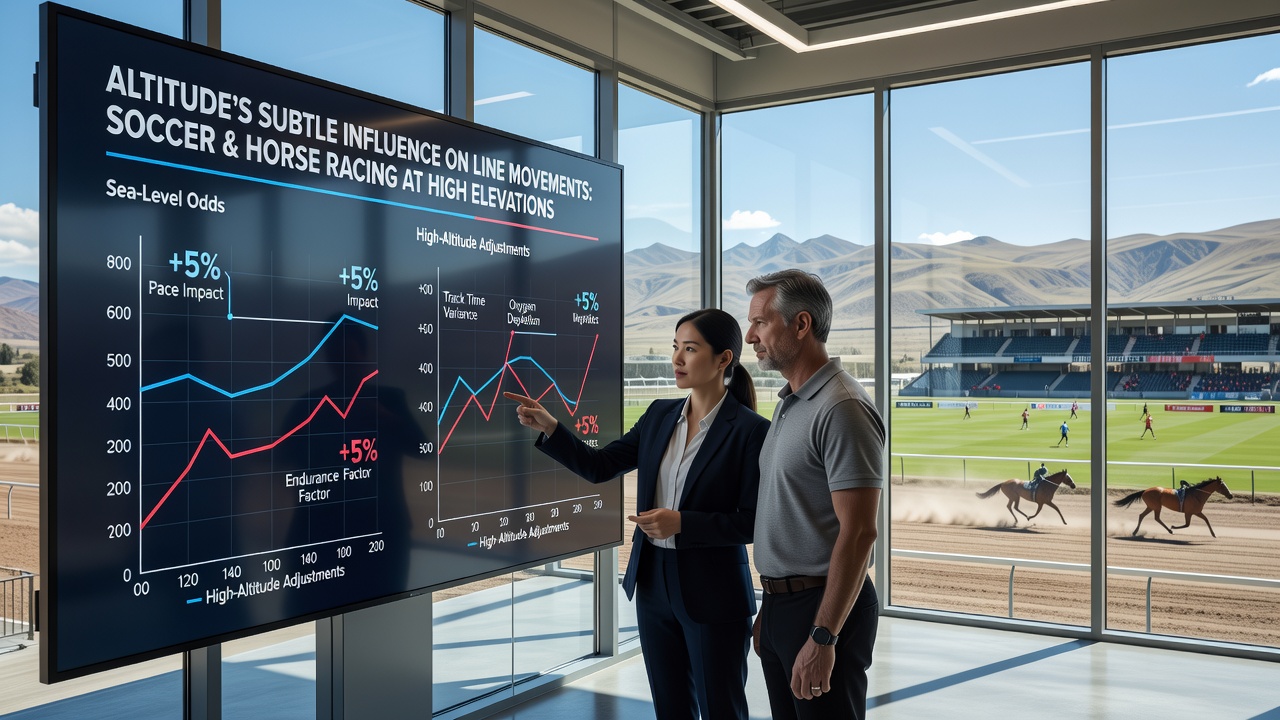
High-elevation venues create measurable shifts in athletic output that bookmakers track through historical performance data and environmental modeling. Soccer matches played above 2,500 meters and horse races conducted on tracks at similar heights show consistent patterns where thinner air alters ball flight distances, equine stamina thresholds, and recovery rates between efforts. These physical variables feed directly into pre-match and in-play odds adjustments as markets incorporate venue-specific statistics accumulated over multiple seasons.
Physical Mechanisms at Elevation
Lower atmospheric pressure reduces air density, which allows soccer balls to travel farther with the same force while simultaneously decreasing oxygen availability for sustained high-intensity activity. Players experience quicker onset of fatigue during repeated sprints, yet the same conditions produce longer throw-ins and set-piece trajectories that change expected scoring rates. Researchers from the University of Colorado have documented average increases in shot distance of 5 to 8 percent at venues like Estadio Hernando Siles in La Paz, and these measurements appear in the datasets that oddsmakers consult when setting initial totals and handicap lines.
Horse racing at altitude presents parallel but distinct challenges. Reduced oxygen uptake limits aerobic capacity in thoroughbreds, particularly during the final furlongs when anaerobic reserves become critical. Tracks situated in regions such as the Colorado Rockies or the Andean racing circuits record slower overall times on days when humidity and temperature compound the oxygen deficit, prompting bookmakers to adjust place and show probabilities accordingly. Data compiled through 2025 indicates that horses with proven records at elevation maintain tighter odds compared with newcomers, while morning-line favorites without prior acclimatization experience measurable drift before post time.
Line Movement Patterns in Soccer
Betting markets for matches at high elevation display characteristic early movement as sharp money reacts to squad lists that include or exclude acclimatized players. Totals markets often open higher because historical goal averages rise when visiting teams struggle with recovery between halves, yet moneyline adjustments can favor home sides more aggressively once public perception of altitude effects solidifies. Observers note that these shifts accelerate in the final 48 hours before kickoff once weather forecasts and pitch reports confirm stable conditions.
During live play, in-play lines respond quickly to early indications of fatigue. A visiting side that presses high in the opening 15 minutes frequently sees its live handicap shorten as markets anticipate second-half drop-off, while total goals lines may extend if the home team exploits longer ball flights on counterattacks. These micro-adjustments accumulate into the broader movement patterns that syndicates monitor across multiple books.
Adjustments in Horse Racing Markets
Racing markets at elevation venues incorporate pace projections that account for slower sectional times in the middle stages of a race. Morning lines posted for events scheduled in July 2026 already reflect updated pace figures drawn from recent trials at the same tracks, with horses carrying extra weight showing more pronounced drift when their previous form occurred at sea level. Exotic wagers such as exactas and trifectas widen in range because the probability distribution of finishing orders flattens under oxygen-limited conditions.

Claiming races and allowance events exhibit distinct late-money patterns when trainers declare equipment changes such as nasal strips intended to aid breathing. These declarations trigger modest but detectable line tightening for affected runners as bettors incorporate the marginal physiological advantage into their calculations. Over multiple meetings, the cumulative data feeds back into future morning lines, creating a feedback loop that sharpens the efficiency of elevation-specific pricing.
Data Sources and Modeling Approaches
Oddsmakers integrate environmental variables into proprietary algorithms that draw on both public and proprietary performance databases. Research published through the National Institutes of Health has quantified oxygen saturation drops and their correlation with workload metrics in team sports, while studies coordinated by the Australian Institute of Sport have examined similar effects in equine athletes. These findings supplement venue-specific historical results that extend back decades at established high-elevation facilities.
Models also incorporate secondary factors such as wind patterns common at altitude and temperature swings that occur rapidly after sunset. When these elements align with known performance decrements, lines move earlier and with greater magnitude than at lower-elevation counterparts. The resulting odds reflect an aggregation of physiological data rather than simple intuition.
Conclusion
Altitude introduces quantifiable variables that influence both athletic outcomes and the subsequent movement of betting lines across soccer and horse racing. Bookmakers respond by layering environmental data into pricing systems that update continuously from pre-event release through final results. As additional performance records accumulate from future events, including those scheduled around July 2026, the precision of these adjustments continues to refine, producing markets that embed elevation effects with increasing granularity.